Buyer's Guide
What That "Great Deal" Camaro Listing Didn't Show You
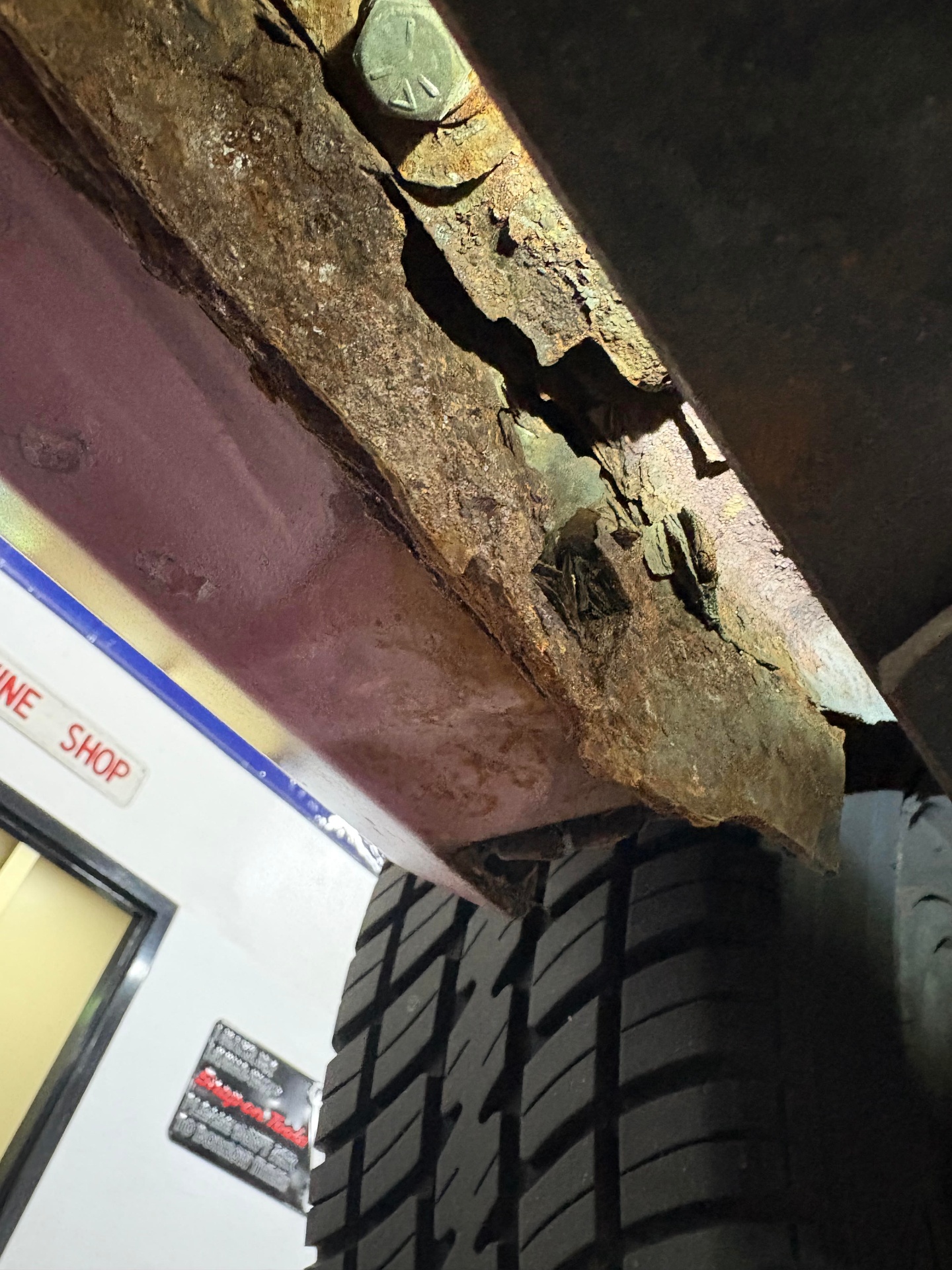
Actual frame rail from the Camaro in question. This is what a listing photo will never show you.
We had a Camaro roll into the shop this week that perfectly sums up a lesson we've been trying to teach folks for years: the internet can make a rust bucket look like a barn find, and your eyes can absolutely be fooled, but a lift can't be.
The owner was thrilled. He'd found what looked like a solid, honest muscle car online, priced well under what the local guys were asking for comparable cars. Clean paint. Good stance. Tidy interior. He pulled the trigger, had it shipped in, and brought it to us for a once-over before he started really driving it.
We put it up on the lift.
And that's when the good deal started looking like a very expensive lesson.
The Camera Lies. The Undercarriage Doesn't.
Once we got underneath, we found what buyers from coastal cities and humid climates run into more often than they'd like to admit: a frame and floor structure that had been quietly rotting away for years, completely invisible from a driveway photo shoot.
We're talking rust-through on the frame rails you could poke a screwdriver through. Rocker panels and subframe connectors so thin and flaky they crumbled at the touch — not the kind of surface rust a wire wheel and some patience can handle, but structural rot that's been eating the car from the inside out for who knows how long. There were spots where the metal had rusted so completely that daylight, or in this case, shop light, was shining straight through what used to be load-bearing steel.
None of that shows up in a listing photo taken from a nice angle in good lighting with the car sitting pretty in a showroom. Nobody's crawling under their car with a flashlight from halfway across the country. And that's exactly the problem.
Cheap and Inexpensive Are Not the Same Thing
Here's the part that stings: our customer didn't get scammed...not exactly. The car was priced accordingly for what it actually was. He just didn't know what it actually was, because nobody told him, and the internet doesn't do full-disclosure.
He paid less. He got less. A lot less. In fact, once you factor in what it will cost to properly address frame rot like this, and we mean properly, not slap-a-patch-panel-over-it properly, he's now looking at a car that is, structurally speaking, worth close to nothing in its current state. That "steal" of a deal just turned into a car that either needs a frame-off rebuild most people can't justify financially, or a very expensive lawn ornament.
That's the thing about buying cheap classics sight-unseen from online sources: you're not actually saving money. You're deferring the cost, adding interest, and rolling the dice on whether you'll ever actually get to enjoy the car you bought, or just stare at it in the garage, waiting for the next infusion of cash to keep the project crawling forward. A car that never gets finished isn't a bargain. It's a very slow money pit with a paint job.
Coastal Cars: Beautiful Views, Brutal on Metal
We'll say the quiet part loud: if a classic car spent any real time near the coast, in a humid climate, or anywhere road salt gets used in the winter, its undercarriage has been fighting a losing battle against moisture for decades. Salt air and humidity don't care how nice your chrome looks. They go straight for the frame, the floors, the rockers...you know, the parts you can't see without getting your hands dirty, and the parts that actually keep the car from folding like a lawn chair.
A great-looking coastal car can be hiding some of the worst structural rot we see. It's not a guarantee every coastal car is a disaster, but it absolutely means "looks great in photos" tells you nothing about what's holding it together underneath.
Why Paying a Little More, Up Front, Usually Pays You Back
We're not saying every deal online is a trap, and we're not saying you should only ever buy from a dealer with a showroom and a fountain in the lobby. We're saying: when you buy from people who actually know classics, who inspect what they sell, who stand behind their reputation, who'd rather lose a sale than sell you a problem, you're not just paying for the car. You're paying for the truth about the car. That's worth something. Usually, it's worth a lot.
Reputable sellers and shops have a name to protect. They're don't disappear after the check clears. That accountability changes behavior. Working with a good shop usually means somebody actually crawled underneath the car before it went up for sale, and told you what they found instead of hoping you wouldn't ask.
Yep, it usually costs more up front. But compare that to the alternative: a car that nickel-and-dimes you (or, in this case, frame-rail-and-floor-pans you) for years, that you're afraid to really drive, that turns "I bought a classic car" into "I bought a problem." The math on the "cheap" car stops looking so good real fast once you're pricing out frame repair instead of enjoying a Saturday cruise.
The Bottom Line
A classic car is only as good as what you can't see. Paint, chrome, and a good camera angle can hide a multitude of sins — but rust doesn't care about your photo composition, and it definitely doesn't negotiate.
If you're shopping for a classic, do yourself a favor: get it inspected by someone who actually knows what they're looking at before you buy it, not after. Ask where it's spent its life. Get underneath it, or have someone you trust do it for you. And if a deal feels too good to be true from three states away with photos that never quite show the underside of the car, well, you already know how that story tends to end. We've got the lift photos to prove it.
Thinking About Buying a Classic? Talk to Us First.
This is exactly the kind of thing we love digging into at Restoration Rods. We've been Idaho's go-to shop for classics and collectors for years, and honestly, this Camaro isn't a rare story around here, it's just the most recent one. Before you wire money to a stranger three states away for a car you've only seen in photos, give us a call. We'll tell you what to look for, what questions to ask, and if you want, we'll put eyes on the car ourselves before you buy.
And if you've already got a classic sitting in your garage, or just a daily driver that needs some honest attention, we handle that too. From full restorations to routine maintenance, we treat every car that comes through our doors the way we'd want ours treated: with honest work, straight answers, and no shortcuts hiding under the paint.
Come see us. We'd rather help you avoid the next rusty surprise than fix it after the fact.